A Woman's Guide to Hormonal Balance: Herbs for Every Phase
9 min read
Male physiology runs on a 24-hour hormonal cycle. Female physiology runs on roughly 28 days. That single difference explains why generic wellness advice — the same routine, the same intensity, the same diet every day — works so poorly for women, and why so many feel like their energy is unpredictable when it's actually highly patterned.
Once you learn the pattern, you can work with it instead of against it.
The four phases
- Menstrual (days 1–5): Estrogen and progesterone are at their lowest. Energy is low, iron is being lost, and the body wants warmth, rest, and minerals. This is not the week for maximum training volume.
- Follicular (days 6–13): Estrogen climbs. Mood, motivation, skin, and pain tolerance all improve. Best window for hard training, new projects, and social energy.
- Ovulatory (days 14–16): Estrogen peaks and testosterone spikes briefly. Highest energy, highest libido, highest confidence — and the shortest phase.
- Luteal (days 17–28): Progesterone dominates. Body temperature rises, appetite increases, and cortisol sensitivity goes up. Magnesium and B6 demand climbs sharply. PMS lives here, and it's usually a signal of nutrient depletion plus a progesterone-to-estrogen imbalance.
The nutrient floor
Before any specialty herb, the foundational gaps have to close — because hormone production is a manufacturing process and it needs inventory.
- Iron — menstruating women lose it monthly. Low ferritin shows up as fatigue, hair shedding, and cold hands long before anemia appears on a standard panel.
- Folate and B12 — methylation, red blood cell production, mood regulation.
- Magnesium — lowers cortisol, eases cramping, deepens sleep. The single most impactful mineral for the luteal phase.
- Vitamin D — functions more like a hormone than a vitamin and directly influences the ovarian cycle.
- Zinc — supports progesterone production and skin clarity.
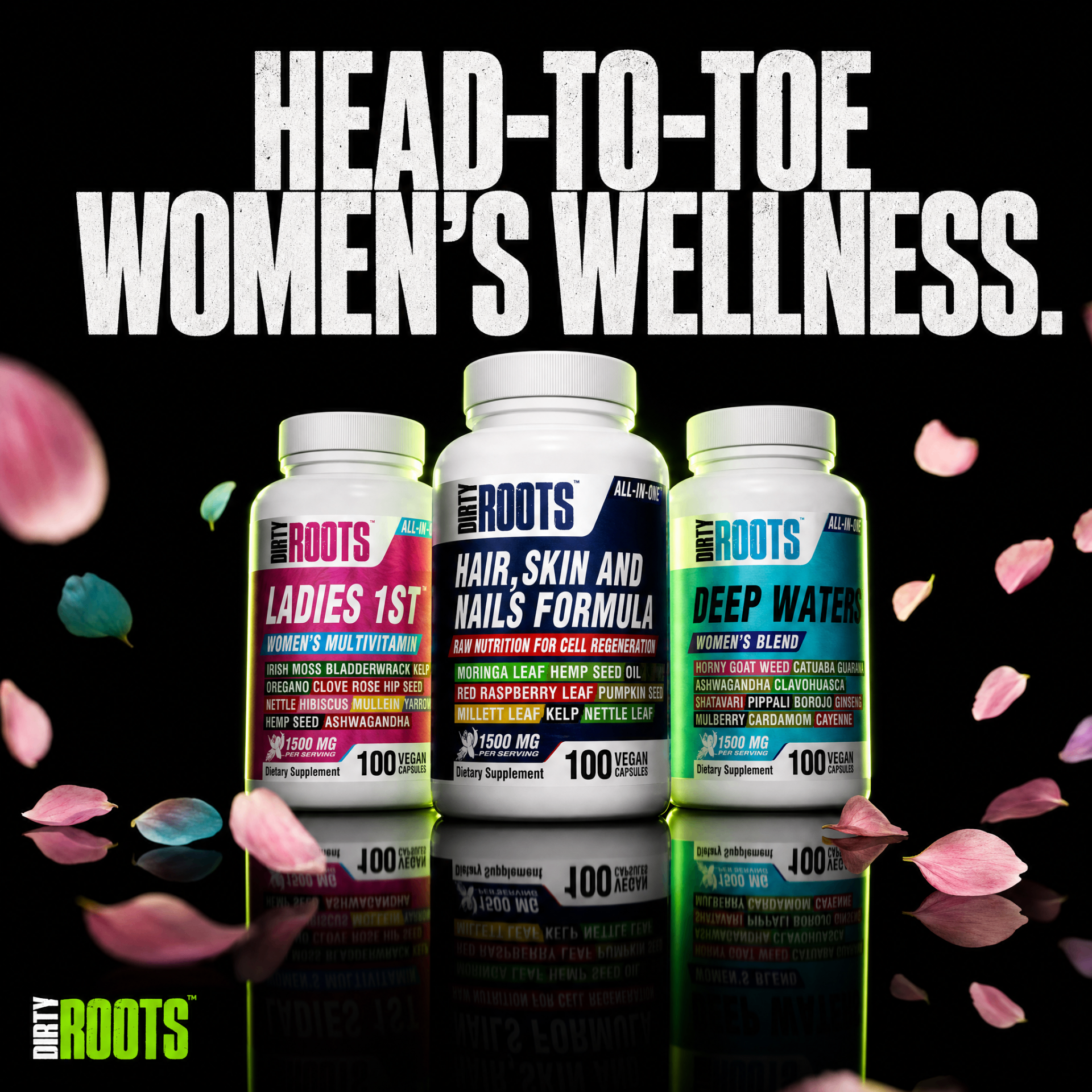
Ladies 1st is built around exactly this floor. It's the least glamorous part of a protocol and consistently the part that makes the biggest difference.
Most 'hormone problems' are nutrient problems that have been going on long enough to look hormonal.
The cortisol tax
Progesterone and cortisol are made from the same precursor. Under sustained stress, your body will make cortisol first — every time. The downstream result is a lower progesterone-to-estrogen ratio, which is the mechanism behind heavy periods, breast tenderness, sharp mood swings, and PMS that gets worse with age.
This is why 'just push harder' backfires for women. Chronic under-eating, over-training, and under-sleeping all read to the body as danger, and the body's response to danger is to deprioritize reproduction.
Fixing this is unglamorous: eat enough, sleep seven to eight hours, keep caffeine under control in the luteal phase, and get magnesium at night.
Herbs for circulation, libido, and skin
Deep Waters supports libido and pelvic circulation with damiana and maca. Maca is worth understanding: it doesn't contain hormones and doesn't force estrogen up. It supports the hypothalamic-pituitary axis — the control tower — which is why it tends to help both women who feel flat and women who feel wired.
Hair, Skin and Nails covers the collagen precursors, biotin, and silica that hormonal shifts deplete first. Skin and hair are usually the earliest visible signal that something upstream is off balance.
Putting it together
The Women's Kit combines Ladies 1st, Deep Waters, and Hair, Skin and Nails into one head-to-toe protocol so the nutrient floor, circulation, and structural support all get handled at once.
A simple daily rhythm:
- Morning: Ladies 1st with breakfast. Protein and fat with it, not coffee alone.
- Daytime: Deep Waters for circulation and drive support.
- Night: Magnesium glycinate and Hair, Skin and Nails. Lights down early in the luteal phase.
Track two cycles before judging anything. Hormonal support is measured in cycles, not days — and the second cycle is almost always where women notice the shift.